In the seafood business, raw material quality is not the only factor that determines smooth operations. Product availability at the right time also plays an important role, especially for restaurants, hotels, distributors, and food processing industries that require a regular supply.
Imagine a restaurant has a fish dish that is a customer favorite. When the raw materials are unavailable as scheduled, the restaurant may have to replace the dish, adjust the recipe, or look for an alternative supplier. These changes can affect the customer experience while adding extra work for the kitchen team.
This situation shows that supply consistency is not just about delivering products. It is also an essential part of seafood business planning.
Why is this factor important, and what should businesses consider when choosing a supplier?
1. Maintaining Menu Availability for Customers
For restaurants, raw material availability is directly related to their ability to serve dishes as planned. When fish supplies are unstable, restaurants risk running out of ingredients before the next scheduled delivery.
The impact does not necessarily stop at one menu item. Changes in raw material availability can affect production planning, the need for accompanying ingredients, and even the kitchen team’s work schedule.
With a more predictable supply, restaurants can:
- Plan menus based on raw material availability.
- Estimate fish requirements for specific operating periods.
- Reduce unplanned menu changes.
- Maintain a more consistent customer experience.
For businesses that rely on fish dishes as one of their main offerings, a supplier’s ability to meet requirements on schedule is an important part of maintaining smooth operations.
2. Supporting Inventory and Procurement Planning
A consistent supply makes it easier for procurement teams to estimate when to place orders, how much product is needed, and how much storage capacity must be available.
Conversely, supply uncertainty may force businesses to purchase larger quantities of raw materials as a precaution. If demand estimates are inaccurate, excess inventory can increase the risk of waste, particularly for products that require temperature control and have a limited shelf life.
Effective inventory planning should consider several factors:
- Average raw material usage per day or week.
- Estimated customer demand.
- Lead time between ordering and delivery.
- Storage capacity for fresh or frozen products.
- Variations in demand during busy and slow periods.
Supply consistency helps businesses develop more structured plans. However, inventory planning still needs to be supported by demand data and clear communication with suppliers.
3. Supply Consistency Must Be Matched by Consistent Specifications
Products that are regularly available may still fail to meet business requirements if their specifications vary from one delivery to another.
In seafood procurement, supply consistency should ideally go hand in hand with product consistency. Restaurants need more than fish delivered on schedule. They also need products with sizes, cut formats, conditions, and characteristics that meet their recipe standards.
For example, a restaurant using loins for a main course needs cuts with suitable weights and thicknesses so that cooking and serving can be planned accordingly.
If product specifications vary significantly between deliveries, the kitchen may need to adjust cooking times, portion sizes, or preparation procedures.
For this reason, buyers should establish several requirements from the outset:
- Product specifications are clearly documented.
- Acceptable size variations are agreed upon.
- Both parties understand the quality requirements and product condition standards.
- Handling and storage procedures are available.
- Changes to product specifications are communicated before delivery.
With clear standards in place, businesses can evaluate not only whether products arrive on time but also whether they meet operational requirements.
4. How Supply Affects Operating Costs
When supplies are disrupted, businesses may need to make procurement decisions at short notice. For example, they may purchase replacement products from another supplier, adjust the menu, or change the production schedule.
These actions can create additional costs, depending on the business’s operating conditions and scale.
Several cost components should be considered.
Alternative Procurement Costs
Changing suppliers may result in differences in prices, specifications, or delivery costs.
Additional Preparation Costs
Replacement products may require different trimming, processing, or recipe adjustments.
Excess Inventory Risks
Purchasing too much to anticipate supply uncertainty can increase storage requirements and the risk of products remaining unused.
Operational Adjustment Costs
When the main raw materials are unavailable, kitchen teams may need to adjust menus, workflows, and production plans.
Not every supply disruption automatically results in significant losses. The impact depends on a business’s ability to anticipate changes and the availability of alternatives. However, accounting for supply risks can help companies make more comprehensive procurement decisions.
5. What Causes Seafood Supply to Change?
Seafood supply is influenced by several factors, and the causes may differ between farmed and wild-caught products.
For farmed fish, factors that can affect production include farming conditions, fish health, feed availability, harvest schedules, and processing capacity.
Meanwhile, wild-caught fish supplies can be affected by seasons, water conditions, catch volumes, fishing locations, and fisheries management regulations.
After production or harvesting, processing, storage capacity, transportation, and the cold chain also affect a product’s ability to reach buyers on schedule.
This means supply consistency cannot be assessed solely based on the production method. Buyers need to understand how suppliers manage production, inventory, processing, and distribution according to the characteristics of the products they offer.
6. How to Evaluate Seafood Suppliers
Before establishing a procurement partnership, restaurants and foodservice businesses should evaluate suppliers based on their actual operational requirements.
The following aspects can serve as a guide.
1. Capacity and Delivery Schedules
Ask about the volume a supplier can fulfill, delivery frequency, order lead times, and procedures for handling schedule changes.
2. Specification Consistency
Ensure that product size, format, condition, packaging, and quality requirements are clearly defined and measurable.
3. Quality Control and the Cold Chain
Evaluate handling, storage, and transportation procedures, along with relevant documentation used to maintain product condition.
4. Product Traceability
Check whether the supplier can provide product origin information and lot identification according to business requirements.
5. Communication and Problem Resolution
Suppliers should have communication procedures in place for delays, changes in availability, or product discrepancies.
6. Performance Based on Delivery History
Record delivery punctuality, quantity accuracy, product condition upon arrival, and specification consistency over time.
Through this evaluation, buyers can compare suppliers based on actual performance rather than relying solely on price quotations or promises of availability.
7. King Tilapia for Foodservice Needs
For restaurants and foodservice businesses that require fish ingredients with clearly defined product specifications, King Tilapia from Regal Springs Indonesia can be considered according to menu requirements and procurement plans.
Regal Springs follows an integrated production approach that covers various stages, from genetics and hatchery operations to farming, fish health management, harvesting, and processing. This integration is part of the company’s approach to managing production processes and product quality.
However, an integrated production process does not automatically guarantee that every product will be available at all times or in every location. Buyers still need to confirm capacity, product sizes, order volumes, delivery schedules, and availability with their suppliers.
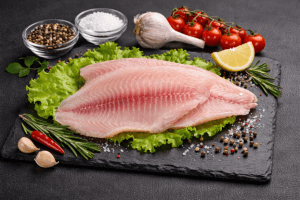
As an example of product specifications, King Tilapia Loins have a minimum weight of 106 grams per piece and a minimum thickness of 19 mm, according to the product standard. These specifications can help chefs establish portion standards and plan raw material requirements for specific menu items.
For businesses that require a regular supply, product specification information should be combined with volume planning and ordering schedules so that operational requirements can be communicated clearly.
Learn more about King Tilapia from Regal Springs Indonesia.
Consistency and Meeting Specifications Matter
Supply consistency is an important part of the seafood business because it affects menu availability, inventory planning, quality standards, and operating cost control.
However, consistent supply means more than products arriving on schedule. Products must also meet agreed specifications, be handled properly, and be supported by clear communication between suppliers and buyers.
For restaurants, hotels, distributors, and food processing industries, evaluating supplier capacity and tracking delivery performance can help establish a more structured procurement process.
King Tilapia from Regal Springs Indonesia can be one option for foodservice raw material needs. The next step is to match product specifications and volume requirements with the supply capacity and delivery schedules that can be confirmed.
Ultimately, well-planned supply helps seafood businesses keep operations under control and provide more consistent service to their customers.