In the restaurant business, raw material purchase prices are often one of the main considerations when selecting fish suppliers. However, another factor is just as important: yield, or the amount of usable product obtained after the raw material has gone through preparation and processing.
Fish purchased at a lower price does not necessarily result in a lower cost per portion. Some of the fish’s weight may be lost during cutting, trimming, or cooking. If these losses are not taken into account, the actual ingredient cost of producing a dish may differ from the initial estimate.
For chefs, restaurant owners, and procurement teams, understanding yield helps connect purchase prices with the results that can actually be served to customers.
1. What Is Yield in Fish Processing?
Simply put, yield indicates how much usable product is obtained from raw materials after a particular stage of processing.
In restaurant operations, there are two important types of yield to distinguish.
Usable Yield or Preparation Yield
Usable yield represents the percentage of raw material that remains usable after preparation, such as gutting, removing bones, skinning when necessary, and trimming.
For example, a whole fish weighs 1,000 grams. After processing, 600 grams of meat suitable for the recipe remain.
The calculation is:
Usable yield = 600 grams ÷ 1,000 grams × 100% = 60%
This means that 60% of the original weight becomes usable material for the dish.
Cooking Yield
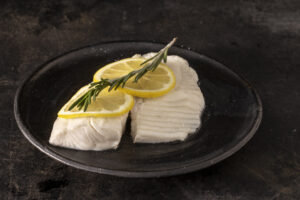
Cooking yield represents the ratio of a product’s weight after cooking to its weight before cooking. This calculation helps restaurants understand how the product’s weight changes during the cooking process.
For example, a fillet weighing 200 grams before cooking weighs 170 grams afterward.
Cooking yield = 170 grams ÷ 200 grams × 100% = 85%
These two types of yield measure different stages. Usable yield relates to the amount remaining after preparation, while cooking yield relates to weight changes during cooking.
2. Why Does Yield Affect Food Cost?
Food cost is not determined solely by the raw material price listed on a purchase invoice. Restaurants also need to know how much usable material is available to produce portions that meet recipe standards.
Imagine two fish products with different purchase prices per kilogram. The lower-priced product may require more trimming, while the other product may already be available in cuts that better suit the kitchen’s needs.
If the purchase price is the only factor compared, the full cost difference may not be apparent.
To understand the impact, restaurants can use this simple formula:
Cost per kilogram of usable material = Purchase price per kilogram ÷ Usable yield expressed as a decimal
Consider the following illustration using hypothetical figures.
In this example, Product A has a lower purchase price. However, after accounting for usable yield, its effective cost per kilogram of usable material is actually higher than that of Product B.
These figures are for illustrative purposes only and do not represent actual market prices or specific product data.
To calculate the final cost of a dish, restaurants still need to consider cooking yield, portion size, and other relevant expenses.
3. Yield Helps Determine Portion Size
Restaurants generally establish portion standards for each menu item. These standards help maintain dish consistency while making raw material planning easier.
However, the weight of fish before cooking is not always the same as its weight when served. Differences can arise during preparation and from weight changes during cooking.
For example, a restaurant sets a target of 150 grams of cooked fish per portion. If the measured cooking yield is 85%, the estimated weight of the fish before cooking would be:
150 grams ÷ 0.85 = approximately 176.5 grams
This means the kitchen needs approximately 176.5 grams of fish before cooking to achieve the target of 150 grams afterward, assuming an 85% yield applies to that specific process.
Actual figures should be tested using the restaurant’s own raw materials, cooking methods, and operating procedures.
By understanding yield, chefs can determine raw material requirements per portion more accurately and reduce the risk of discrepancies between recipe standards and final results.
4. Fish Product Types Affect How Yield Is Calculated
Yield must be calculated according to the form of the purchased product. Whole fish, fillets, and loins start at different stages of processing, so their yields cannot be compared directly based on percentages alone.
Whole Fish
When a restaurant purchases whole fish, usable yield needs to account for parts not used in the dish, such as the head, bones, or other components excluded from the recipe.
Fillets
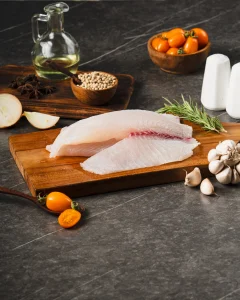
Fillets have already gone through the process of separating the meat from the main bones. However, trimming, skin removal when necessary, and size adjustments can still affect usable yield.
Loins
Loins are cuts of fish meat prepared according to specific specifications. If their size and shape already match the recipe requirements, less additional cutting may be necessary. Even so, actual results still depend on product condition and processing methods.
For this reason, seafood buyers should compare products at the same processing stage. Comparing the price of whole fish with the price of loins without accounting for the amount of usable meat can lead to inaccurate conclusions.
5. How to Measure Yield in a Restaurant Kitchen
Yield does not have to be based on assumptions. Restaurants can measure it through simple trials using the procedures actually applied in their kitchens.
The following steps can be used:
- Weigh the initial raw material. Record the product’s weight before preparation or cooking.
- Prepare the product according to standard procedures. Process the fish as the kitchen team normally would.
- Weigh the product after preparation. Use this weight to calculate usable yield.
- Cook using standard procedures. Record the cooking method, temperature, and duration.
- Weigh the cooked product. Use this weight to calculate cooking yield.
- Repeat the test. Use several samples to obtain more representative results.
Yield records can be organized by product type, cut size, supplier, cooking method, and product condition. This gives restaurants more relevant data for determining purchasing specifications and estimating raw material costs.
It is important to keep measurement methods consistent. Differences in weighing procedures or the timing of measurements can affect the calculated results.
6. Factors That Affect Cooking Yield
Cooking yield is not a fixed figure that remains the same under every condition. The weight after cooking can be affected by several factors.
- Cut thickness and size: These influence heat transfer and cooking duration.
- Cooking method: Pan-searing, grilling, and oven-baking can produce different weight changes.
- Cooking temperature and duration: Longer or more intense cooking can increase moisture loss.
- Raw material condition: Handling, storage, and the product’s initial condition can affect the results.
- Frozen product thawing: Thawing methods and handling after thawing can affect the measured weight.
For this reason, restaurants should not apply a single yield figure to every fish species and cooking method. Testing should match the actual product specifications and processes being used.
7. Understanding Yield Standards for King Tilapia
For restaurants that require raw materials with clearly defined specifications, King Tilapia from Regal Springs Indonesia can be evaluated according to menu requirements and kitchen operating standards.
For example, the King Tilapia Loins product standard specifies a minimum weight of 106 grams per piece and a minimum thickness of 19 mm. These specifications can help chefs design portion sizes and select suitable cooking methods.
The product standard also specifies a target cooking yield of more than 85% for fresh loins or frozen products handled properly in accordance with product requirements.
This figure represents a target based on the product standard, not a guarantee that every restaurant will achieve the same result. Actual outcomes still depend on storage, thawing, handling, cooking techniques, and the measurement method used.
Furthermore, this cooking yield target is not the same as the usable yield obtained when processing whole fish into meat. These figures measure different stages of processing and should not be used interchangeably in cost calculations.
For chefs and procurement teams, this product specification information can serve as a starting point for conducting trials, evaluating actual results, and calculating cost per portion based on business needs.
Learn more through the King Tilapia page from Regal Springs Indonesia.
Key Factors When Choosing Fish Ingredients
Yield is an important factor to consider when selecting fish ingredients for restaurants. By understanding usable yield and cooking yield, businesses can estimate processing results, determine raw material requirements per portion, and compare product costs more accurately.
Purchase price remains important, but its value needs to be assessed alongside the amount of material that can actually be used and served.
By measuring yield consistently, chefs and procurement teams can make more informed purchasing decisions while maintaining a balance between dish quality and operational efficiency.
Ultimately, understanding yield is not simply about calculating weight loss. It is a way to determine the true value of fish ingredients in every portion served to customers.