In the food industry, sustainability is becoming increasingly relevant to how businesses select raw materials, design menus, and manage operations. For restaurants, hotels, catering companies, and other foodservice businesses, the discussion goes beyond using local ingredients or reducing plastic. Seafood sourcing is also an important part of building a more responsible food supply chain.
But what exactly is meant by sustainable seafood? Is it enough to choose farmed fish, purchase certified products, or reduce kitchen waste?
No single action can address all these challenges. Seafood sustainability needs to be considered from multiple perspectives, ranging from product sourcing and production practices to traceability, raw material management, and food waste reduction.
For foodservice businesses, this approach can become part of both their procurement strategy and long-term business management.
1. What Does Sustainable Seafood Mean for Foodservice Businesses?
In general, sustainable seafood refers to seafood sourced from production or fishing practices that consider resource sustainability and environmental impacts.
In procurement, this concept cannot be assessed solely based on the type of fish or its production method. Both farmed and wild-caught fish need to be evaluated according to the practices involved.
For wild-capture fisheries, considerations may include fish stock conditions, fishing methods, impacts on non-target species, and fisheries management.
For aquaculture, buyers can assess water quality management, feed, fish health, resource use, and the impact of farming activities on surrounding ecosystems.
For restaurants and foodservice businesses, the key questions are: Where does the seafood come from, how is it produced, and what information is available to evaluate the supplier’s practices?
This approach helps businesses make procurement decisions based on relevant information rather than relying solely on labels or sustainability claims.
2. Traceability: Knowing Where Raw Materials Come From
One of the foundations of responsible seafood procurement is traceability.
Traceability helps businesses follow a product’s journey through the supply chain, from its production source to processing and distribution. The available information may vary depending on the product type, production system, and market requirements.
For seafood buyers, the information to review may include:
- Product and species identification.
- Product origin or relevant production location.
- Producer and processing facility information.
- Product lot or batch identification.
- Relevant quality, food safety, and legal documentation.
The Food and Agriculture Organization of the United Nations (FAO) emphasizes the importance of an integrated traceability approach across the value chains of wild-capture fisheries and aquaculture. Effective traceability supports information verification and product risk management.
For foodservice businesses, such systems can help with supplier evaluation, procurement documentation, and handling cases where product discrepancies are identified.
3. Choosing Suppliers with Clear Criteria
More responsible seafood procurement requires measurable purchasing criteria. Restaurants do not need to overhaul their entire procurement systems immediately. They can start by establishing requirements relevant to their products and business needs.
Several criteria to consider include:
Origin and Production Method
Ensure that information about product sourcing is available and meets the business’s documentation requirements.
Quality and Food Safety
Evaluate handling procedures, storage, temperature control, and relevant quality documentation.
Traceability
Check whether suppliers can provide product identification and origin information according to business requirements.
Environmental Practices
If sustainability is part of the procurement policy, define the aspects to be evaluated, such as resource management, ecosystem impacts, or relevant certification evidence.
Supply Consistency
Ensure that products can meet the agreed specifications, volumes, and delivery schedules.
Clear criteria help buyers compare suppliers more objectively. If certifications or ecolabels are used as indicators, verify that their scope, standards, and validity apply to the products being purchased.
4. Food Waste Is Also Part of Sustainable Foodservice
Sustainability is not determined solely by the source of raw materials. How restaurants use those materials also plays an important role.
When food is wasted, the resources used to produce, process, store, and transport it are wasted as well. Reducing food waste can therefore be a practical step toward improving efficiency while minimizing environmental impacts.
According to guidance from the US Environmental Protection Agency (EPA), food waste prevention can begin with purchasing according to actual needs, monitoring inventory, evaluating food leftovers, and improving preparation processes.
In seafood operations, several practical steps can be implemented:
- Adjust purchasing volumes according to estimated demand.
- Monitor receiving dates and storage conditions.
- Establish portion standards to reduce serving leftovers.
- Measure cutting results or usable yield.
- Evaluate why raw materials spoil or remain unused.
- Adjust preparation according to customer ordering patterns.
These measures can begin with a single raw material category, such as fish used regularly in the kitchen. By recording purchase quantities, usage, and remaining stock, restaurants can identify areas for improvement based on their own operational data.
5. Consistent Raw Materials Support More Measurable Management
In foodservice, sustainability is also connected to the ability to manage raw materials efficiently.
Products with clearly defined specifications can help chefs plan portion sizes, cooking processes, and inventory requirements. This does not automatically make a product more sustainable, but it can support more measurable raw material management.
For example, a restaurant using fish cuts of a specific weight can establish recipe standards and estimate the quantity of ingredients needed for each operating period.
If processing results are also recorded, the business can evaluate usable yield, cooking yield, and the amount of leftover material. These data help kitchen teams identify whether waste occurs during cutting, storage, excessive preparation, or serving.
In this way, product consistency and operational efficiency can become part of a more responsible foodservice management strategy, without replacing the need to evaluate the environmental impacts of the seafood’s source.
6. King Tilapia in Seafood Procurement Considerations
For restaurants and foodservice businesses looking to evaluate farmed fish options, King Tilapia from Regal Springs Indonesia can be considered based on product specifications and operational requirements.
Regal Springs follows an integrated production approach covering stages such as genetics, hatchery operations, farming, fish health management, harvesting, and processing. The company also has a sustainability program called KAMI PEDULI, which focuses on responsible aquaculture, lake ecosystem protection, and support for local communities.
Information about these programs and practices can form part of a buyer’s evaluation. However, specific sustainability claims should be assessed based on their scope, supporting evidence, and verifiable outcomes, rather than relying solely on the production method or the existence of a particular program.
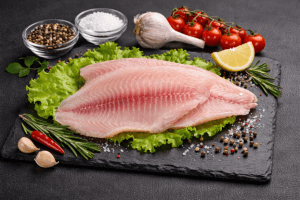
For kitchen requirements, the King Tilapia Loins product standard specifies a minimum weight of 106 grams per piece and a minimum thickness of 19 mm. These specifications can help chefs plan portions and cooking processes for specific menu items.
The product standard also specifies a target cooking yield of more than 85% for fresh loins or frozen products that are handled properly. Actual results still depend on product condition, storage, thawing, and cooking techniques. This yield information can support operational planning, but it does not independently establish the product’s environmental impact.
To assess suitability, buyers can combine evaluations of product specifications, supply requirements, traceability, quality documentation, and available information about production practices.
Learn more through the King Tilapia page from Regal Springs Indonesia.
7. First Steps Toward Implementing Sustainable Seafood in Restaurants
Restaurants do not need to change their entire procurement process at once. A gradual approach can help teams understand their needs, establish priorities, and measure progress.
Here are several steps they can take:
- Map seafood usage. Identify fish species, purchasing volumes, suppliers, and menu items that use the most raw materials.
- Establish procurement criteria. Define requirements for quality, product origin, traceability, and relevant environmental considerations.
- Evaluate suppliers. Request information and documentation that can support assessments of products and production practices.
- Measure food waste. Record leftover raw materials, cutting yields, and unsold food.
- Review results regularly. Use purchasing, usage, quality, and waste data to determine the next improvements.
The World Business Council for Sustainable Development (WBCSD) also highlights the role of foodservice procurement in integrating nutrition and sustainability goals, including through clear criteria, data transparency, and collaboration with suppliers.
With measurable steps, sustainability can become part of everyday decision-making rather than just a message in brand communications.
Sustainable Seafood Is More Than a Trend or Label
Sustainable seafood is more than a trend or a label on a menu. For foodservice businesses, it encompasses how raw materials are selected, suppliers are evaluated, traceability is ensured, inventory is managed, and food waste is reduced.
No single seafood species or production method automatically guarantees sustainability under all conditions. Assessments need to consider product origin, the practices involved, available evidence, and business operating requirements.
King Tilapia from Regal Springs Indonesia can be one option to evaluate when sourcing seafood. By reviewing product specifications, origin information, production practices, and kitchen requirements together, buyers can make more informed and measurable decisions.
Ultimately, building sustainable foodservice starts with clear procurement decisions, verifiable data, and consistent operational improvements.