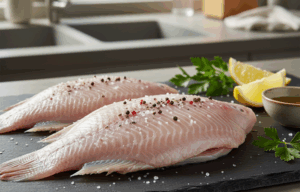
In the restaurant business, fish size is more than just a number on a product specification sheet. Size affects how raw ingredients are processed, how many portions can be produced, how dishes are presented, and how much cost needs to be allocated to each menu item.
For chefs and procurement teams, understanding the relationship between fish size and portion size is an important step in managing seafood ingredients. A larger fish does not necessarily produce the most suitable portions, just as smaller cuts are not always more efficient.
The key is to choose a product size that matches the dish concept, portion standards, and kitchen operational needs.
1. Fish Size Is Not the Same as Portion Size
Before determining raw material specifications, it is important to distinguish between whole fish size, cut size, and serving size.
Whole fish size refers to the weight of the fish before processing. Meanwhile, fillet or loin size refers to the portion of meat that has been cut according to specific requirements.
Portion size, on the other hand, is the amount of raw ingredient used for a single serving based on the restaurant’s recipe standards.
These three factors are related, but they should not be treated as interchangeable. Some of the weight of a whole fish will consist of parts that are not used for a particular dish. Once processed into fillets or loins, the weight may also change during cooking.
For this reason, restaurants need to consider the entire processing chain when determining their raw material requirements.
2. Why Does Size Matter for Portion Consistency?
In restaurant operations, portion consistency helps maintain the customer experience while making cost control easier.
Imagine a restaurant serving grilled fish with a specific portion standard. If the fish cuts vary in size, chefs need to adjust cooking times and plating accordingly. Differences in weight can also affect the ingredient cost of each serving.
Cuts with clearly defined specifications help kitchen teams:
- Determine the quantity of raw ingredients needed for each order.
- Maintain the proportions of fish and accompanying components.
- Adjust cooking times based on the dimensions of each cut.
- Calculate stock requirements based on estimated customer numbers.
- Establish standardized recipes that can be followed by the entire kitchen team.
Consistent sizing does not mean every cut must have exactly the same weight under all circumstances. What matters is that the restaurant establishes a size range or specification that suits its menu requirements and ensures that incoming products meet the agreed standards.
3. Cut Size Affects the Cooking Process
The weight and thickness of fish influence how heat travels through the product during cooking. Thicker cuts generally require different cooking times than thinner cuts, even when both have similar weights.
This is important for several cooking methods commonly used in foodservice.
Pan-Seared Fish
Chefs need to balance the formation of a browned surface with the doneness of the interior. Cut thickness is one of the factors used to determine cooking temperature and duration.
Grilled Fish
Cut size helps kitchen teams estimate cooking times and arrange fish properly on the grill.
Oven-Baked Fish
Cuts with relatively uniform dimensions can make it easier to manage the cooking process when preparing several portions at once.
However, weight and thickness are not the only factors that determine doneness. The product’s initial temperature, raw material condition, equipment characteristics, and cooking techniques must also be taken into account.
For restaurants that prioritize consistency, testing recipes using the exact cut sizes intended for actual service is an important step.
4. Size Matters in Food Cost Calculations
Product size is also directly related to raw material cost planning.
The purchase price per kilogram is not enough to determine whether a product is efficient to use. Restaurants need to know how much of the product can actually be used and how many portions it yields after preparation and cooking.
Two aspects need to be distinguished:
- Usable yield: The portion of the product that can be used after cutting, trimming, or other preparation processes.
- Cooking yield: The ratio of the product’s weight after cooking to its weight before cooking, based on the measurement method used.
For example, whole fish and loins cannot be compared solely on their price per kilogram. Whole fish may require additional processing to separate the meat, while loins are already cut into specific portions. A more relevant comparison is the cost of producing a ready-to-serve portion that meets the restaurant’s standards.
The basic formula is:
Raw material cost per portion = Total cost of raw materials used ÷ Number of portions produced
This calculation can be expanded to include labor, trimming, storage, and other relevant costs.
With this approach, procurement teams can evaluate products based on actual operational requirements rather than purchase price or fish size alone.
5. Matching Size to the Menu Concept
Not every restaurant requires the same fish size. The ideal specifications depend on the type of dish, target customers, and how the menu is presented.
For example, a restaurant serving fish as an individual main course may need fillets or loins with a defined weight. Meanwhile, a restaurant specializing in grilled fish intended for sharing may consider whole fish in sizes suited to its planned serving format.
Size selection should begin with menu design and then be translated into the required raw material specifications.
6. Understanding King Tilapia Size Standards
For foodservice businesses that require clearly defined raw material specifications, King Tilapia from Regal Springs Indonesia has size standards for specific product types.
Some specifications relevant to menu planning include:
- King Tilapia Whole Round: Minimum target weight of 2.65 lb, or approximately 1.2 kg per fish.
- King Tilapia Fillet: Minimum size standard of 5 oz, or approximately 142 grams.
- King Tilapia Loins: Minimum weight of 3.8 oz, or approximately 106 grams per piece, with a minimum thickness of 19 mm.
These specifications refer to the standards for each respective product and do not mean that every fish or cut has exactly the same weight. Actual weight may vary depending on the product and individual size.
For King Tilapia Loins, the product standard also specifies a target cooking yield of more than 85% for fresh products or frozen products handled properly. Actual results still depend on product condition, storage, thawing, and cooking techniques.
This size information can serve as a starting point for chefs when establishing portion standards, while procurement teams can use it to estimate raw material requirements and order volumes.
Learn more about King Tilapia from Regal Springs Indonesia.
7. How to Determine the Right Size for a Restaurant
To make procurement decisions more targeted, chefs and procurement teams can follow these steps.
First, establish serving standards. Determine the weight of fish required per portion and how the dish will be presented.
Second, choose the product format. Decide whether the menu requires whole fish, fillets, or loins based on recipe requirements and kitchen capacity.
Third, evaluate the specifications. Check the weight, thickness, size consistency, and condition of the products offered by suppliers.
Fourth, conduct product trials. Cook the products using actual operating procedures to evaluate the final result, cooking time, and cooking yield.
Fifth, calculate the cost per portion. Compare costs based on the number of servings that can actually be produced, rather than purchase price alone.
Finally, evaluate supply reliability. Ensure that the selected specifications can be supplied consistently according to volume requirements and delivery schedules.
This process helps businesses connect menu requirements with product specifications in a more measurable way.
Fish Size Influences Processing Results
In foodservice, fish size and portion size are related but distinct. Fish size affects the potential processing yield, while portion size is determined by the restaurant’s recipe requirements and serving standards.
Understanding the relationship between these two factors helps chefs maintain dish consistency while enabling procurement teams to plan inventory and calculate raw material costs more accurately.
With clearly defined product specifications, including different fillet and loin sizes, King Tilapia can be one option for supporting fish menu requirements in restaurants and foodservice businesses.
Ultimately, size matters is not simply about choosing a larger fish or a heavier cut. What matters most is selecting the right size to produce consistent portions, match the menu concept, and support operational efficiency.