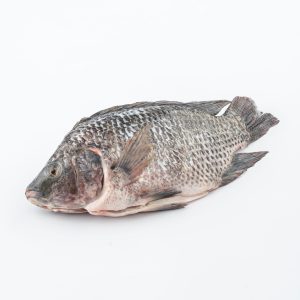
In the seafood business, every product serves a purpose based on market needs. Some buyers prioritize cost efficiency and flexibility, while others require more clearly defined specifications for size, thickness, and cooking performance.
The same applies to tilapia.
Regal Springs Indonesia supplies tilapia for various market needs, including King Tilapia, which is developed according to premium quality standards. Both can be good options, depending on customer requirements, menu types, and the operational standards a business aims to achieve.
So, what distinguishes King Tilapia from regular tilapia, particularly in terms of yield and fillet quality? The answer lies in product specifications, intended applications, and the added value buyers need.
1. Two Options for Different Market Needs
Tilapia has long been used as an ingredient for a wide range of culinary applications and food industries. Its white flesh and relatively mild flavor make it versatile enough for various dishes.
Regular tilapia can be a suitable option for high-volume requirements, everyday menus, processed products, and other applications that align with a buyer’s specifications and budget. As long as the product meets the required quality standards, regular tilapia continues to have value throughout the seafood supply chain.
King Tilapia, on the other hand, is developed to meet more clearly defined quality standards. This approach is relevant for buyers who need specific product requirements to support portion consistency, processing, and presentation.
The difference, therefore, does not mean that one product is always better than the other. It comes down to the needs being addressed and the product standards required by each market.
2. Yield: Understanding the Results Obtained from Raw Ingredients
Yield is one factor to consider when selecting fish ingredients. However, the term can refer to two different measurements.
- Usable yield is the proportion of raw material that remains usable after preparation processes, such as trimming or removing unwanted parts.
- Cooking yield is the proportion of a product’s weight after cooking compared with its weight before cooking, based on the measurement method used.
Both are important, but they answer different questions. Usable yield helps buyers understand how much material is available for processing, while cooking yield indicates how much product weight remains after cooking.
When comparing regular tilapia with King Tilapia, buyers need to ensure that the product formats, raw material conditions, and processing methods are comparable.
Regular tilapia that meets kitchen requirements can deliver suitable results for its intended application. King Tilapia, meanwhile, offers specific product specifications that can help buyers plan product usage more systematically.
Since not all tilapia products have the same characteristics, yield results should be determined through testing the actual products rather than relying solely on product names or categories.
3. King Tilapia’s Advantage in Cooking Yield Standards
One of King Tilapia’s added values lies in its more clearly defined product standards, including those for King Tilapia Loins.
The King Tilapia Loins product standards specify a target cooking yield of more than 85% for fresh products or frozen products handled correctly in accordance with product requirements.
For illustration, if 1 kg of loin achieves an 85% cooking yield, the product will weigh approximately 850 grams after cooking. This figure is an illustration based on the target yield, not a guarantee of identical results in every cooking process.
This target can serve as a reference for buyers when evaluating products for menu requirements and portion planning.
However, actual results are still influenced by raw material condition, storage, thawing procedures, cooking temperature, cooking duration, and processing techniques.
Regular tilapia can also achieve good cooking yields when product quality and handling are appropriate. Therefore, King Tilapia’s advantage does not mean that all other tilapia products have lower yields. Rather, it offers a defined target specification that can be used as a reference when evaluating products.
4. Fillet Size and Thickness for Premium Menu Requirements
Beyond yield, fillet size and thickness also determine how fish can be used in professional kitchens.
For certain menus, chefs may need cuts of a specific size for main courses. In other applications, smaller sizes or different cut formats may be more practical and economical.
King Tilapia Loins have the following product specifications:
- Minimum weight of 106 grams per piece.
- Minimum thickness of 19 mm.
These specifications provide a clear reference for chefs and procurement teams when planning portions or evaluating whether ingredients meet menu standards.
Suitable thickness can enhance dish presentation and support cooking process planning. However, every menu has different requirements. A product with a particular thickness is not necessarily the most suitable choice for every application.
Regular tilapia can still be used for a wide range of dishes, including everyday menus and processed products, as long as its size and characteristics meet the requirements.
King Tilapia, meanwhile, can be an option for buyers who specifically need loins with predetermined size and thickness specifications.
5. Fillet Quality: What Should Be Evaluated?
Fillet quality is not determined by size alone. Buyers and chefs should also consider texture, flavor, color, physical condition, and product performance during cooking.
Both regular tilapia and King Tilapia need to meet quality standards relevant to their intended applications.
Differences in requirements typically arise when buyers need more specific product standards. For example, restaurants that feature fish as a main course may require consistent cut weights and thicknesses. In contrast, processed food manufacturers may prioritize raw material suitability for their production processes and cost targets.
King Tilapia offers product standards that cover quality characteristics and culinary performance. This gives buyers a reference point when evaluating products.
However, the final assessment should still be based on the condition of the delivered product, quality testing, and suitability for the intended application. Regular tilapia that meets a buyer’s standards can also deliver the right quality for its intended use.
6. Choosing Products Based on Business Needs and Cost per Serving
Purchase price is an important part of seafood procurement, but it is not the only factor that determines operating costs.
Buyers also need to consider usable yield, cooking yield, trimming requirements, portion sizes, and necessary preparation processes.
For example, a restaurant offering fish as a main course may require cuts with specific weights and thicknesses. In this situation, the specifications of King Tilapia Loins can help with portion planning.
Meanwhile, for menus with more flexible size requirements or processed products with different standards, regular tilapia may be a suitable option.
To make more objective decisions, buyers can take the following steps:
- Define menu requirements. Identify the product format, portion size, and cooking method.
- Check product specifications. Compare weight, thickness, product condition, and acceptable variation.
- Test yield. Measure usable yield and cooking yield using the same procedures.
- Calculate cost per serving. Use actual results rather than relying solely on the purchase price per kilogram.
- Evaluate supply. Ensure the product meets volume requirements, delivery schedules, and quality standards.
This approach helps buyers identify the most suitable product without assuming that one option is always superior for every business need.
7. King Tilapia as an Option for Premium Standards
King Tilapia occupies the highest tier in the Global Open Standard for Tilapia Quality, which consists of four levels: King, Prime, Choice, and Base.
The standard covers various aspects, including farming practices, size, processing quality, fish welfare, nutritional composition, and culinary performance.
This approach provides differentiation for buyers who require products with more clearly defined premium standards.
In foodservice, clear specifications can support product evaluation, portion planning, and the alignment of ingredients with kitchen requirements.
However, regular tilapia continues to play an important role in meeting various market needs. Product selection should ideally be based on actual specifications, intended applications, and expected economic value.
For buyers interested in exploring products that meet these premium standards, further information is available on the King Tilapia page from Regal Springs Indonesia.
It Depends on Your Business Needs
Both regular tilapia and King Tilapia have value in the seafood industry. They can be used for various applications as long as their characteristics meet the relevant standards and intended purposes.
King Tilapia’s main distinction lies in its more clearly defined quality standards, including the specifications for King Tilapia Loins: a minimum weight of 106 grams per piece, a minimum thickness of 19 mm, and a target cooking yield of more than 85% when handled appropriately.
For buyers, these specifications can serve as a reference when they need products for menus that require specific sizes and thicknesses.
Ultimately, the best choice depends on business requirements. Regular tilapia can meet needs that prioritize flexibility and budget suitability, while King Tilapia can be an option for buyers seeking more clearly defined premium standards.
By understanding their requirements and objectively evaluating product specifications, buyers can select the right product for each application.