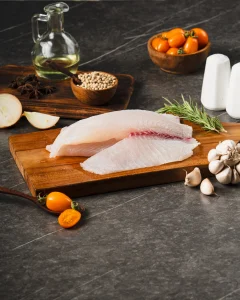
For years, white fish such as cod, seabass, and seabream have been the go-to choice in many restaurants, hotels, and even premium retail markets worldwide.
Their delicate texture, mild flavor, and versatility in various dishes have made these fish consistently sought after.
However, today, the global market is changing.
The availability of some ocean-caught whitefish is increasingly limited due to pressure on fish stocks, climate change, fisheries regulations, and increasing global demand. Amidst these conditions, premium tilapia is beginning to be seen as a solution for the future of modern whitefish, beyond just ordinary freshwater fish.
This change is not without reason. The quality of farming, the consistency of supply, and the culinary performance of premium tilapia now make it comparable to other global whitefish such as cod and seabass.
The Global Whitefish Market is Undergoing Change
In recent years, the global seafood industry has faced significant challenges. The supply of traditional whitefish like cod has become tighter, while prices continue to rise. Various observers have even highlighted a decline in global cod production, leading to significant price increases on the international market.
This situation has led many buyers, chefs, and retailers to seek alternative white fish that are:
- Consistently available year-round
- Has a mild and flexible flavor
- Stable in terms of quality
- Remains affordable
- Responsibly produced
This is where premium tilapia is starting to gain renewed attention.
Not All Tilapia Is the Same
One reason tilapia was once often overlooked is because the global market is accustomed to viewing it as a commodity fish with highly variable quality.
However, the quality of tilapia is greatly influenced by its cultivation methods.
In food science materials on tilapia, it is explained that factors such as water quality, feed, antibiotic use, and the cultivation environment significantly affect the taste, texture, and nutritional content of the fish.
Tilapia responsibly farmed in natural lakes has different characteristics than fish raised in muddy ponds with lower standards.
Regal Springs Indonesia cultivates tilapia in natural lakes using an integrated and traceable farming system. Their product is also known for being antibiotic-free, preservative-free, and having a clean taste without the smell of mud.
This is what makes premium tilapia increasingly enter the category of high-quality white fish.
Why Is Premium Tilapia Starting to Be Compared to Cod and Seabass?
1. Mild and Easily Acceptable Flavor
One of the strengths of white fish is its mild flavor and ease of pairing with a variety of dishes. Premium tilapia shares similar characteristics.
The meat tends to be soft, not overly “fishy,” and is suitable for various cooking techniques such as grilling, pan-searing, baking, and even Asian comfort food.
Because of its neutral flavor, tilapia is more flexible for both the global market and everyday family needs.
2. Consistent Texture
Modern premium tilapia is no longer synonymous with a mushy texture.
In developing King Tilapia, Regal Springs explains that the fish are raised to large sizes using a low-stress farming system to produce a thicker, firmer meat texture and high cooking performance.
In fact, premium King Tilapia loins have a specific thickness standard and a high cooking yield to maintain juiciness when cooked. This is one reason why professional chefs are starting to view premium tilapia as an alternative to modern white fish.
3. Stable and Year-Round Availability
Unlike some marine whitefish, which are heavily influenced by seasons and catch quotas, farmed tilapia has the advantage of stable supply.
For the restaurant, hotel, and retail industries, consistent supply is crucial. They require products that:
- Are consistent in size
- Are available year-round
- Have a more stable price
- Are less affected by seasonal fluctuations
- Premium tilapia can meet these needs.
4. Competitive Nutrition
Tilapia is also gaining attention for its nutritional profile.
In food and health contexts, tilapia is known as a source of high-quality protein with a relatively low fat content. Furthermore, tilapia also contains vitamin B12, vitamin B6, selenium, phosphorus, potassium, and omega-3 and omega-6 in a balanced ratio.
Regal Springs Indonesia also highlights the high vitamin D content of its tilapia products.
This combination makes tilapia increasingly relevant amidst the high-protein lifestyle trend and modern, more nutrition-conscious diets.
The Future of Whitefish Is No Longer Just from the Sea
Formerly, many people assumed premium whitefish had to come from the sea. However, developments in modern aquaculture are beginning to change that perception.
Premium tilapia demonstrates that farmed fish can also have:
- high quality,
- clean flavor,
- premium texture,
- responsible production systems,
- and global consistency.
In the abstract of the World Tilapia Conference presentation, it was stated that tilapia holds great potential as a climate-friendly protein with a lower carbon footprint than some other animal proteins.
This means that the future of whitefish is not just about taste and texture, but also about sustainability, traceability, and global food security.
Tilapia Is Entering a New Era
Today, tilapia is no longer just a freshwater fish chosen for its price.
Through modern farming standards, premium quality, and improved culinary performance, tilapia is entering a higher category of whitefish in the global market.
In fact, concepts like King Tilapia are beginning to demonstrate that the seafood industry is moving towards quality differentiation, much like the meat industry has recognized wagyu or king prawn in the premium seafood category.
For modern consumers, this means a wider choice of whitefish: they’re looking not just for delicious fish, but also for consistent, nutritious, safe, and responsibly produced fish.