In the seafood industry, buyers must choose not only the type of fish they need but also how it is produced. Two common categories are farmed fish, which are raised through aquaculture, and wild-caught fish, which are harvested from their natural habitats.
Both have different characteristics and procurement considerations. Wild-caught fish can offer specific characteristics depending on the species and its habitat, while farmed fish allows production processes to be managed through planned farming systems.
For restaurants, hotels, distributors, retailers, and food processing industries, purchasing decisions should not be based solely on whether fish comes from aquaculture or wild capture. Buyers also need to evaluate product quality, size consistency, traceability, supply availability, and suitability for their business needs.
So, what should buyers consider before making a choice?
1. Understanding the Differences Between Farmed Fish and Wild-Caught Fish
Farmed fish are raised through aquaculture activities. The production process may involve managing fish seed, feed, fish health, farming environments, and harvesting schedules.
Wild-caught fish, on the other hand, come from fishing activities in natural habitats such as oceans, rivers, and lakes. Product availability and characteristics may be influenced by species, environmental conditions, fishing locations, seasons, and fisheries management.
The fundamental difference lies in their production systems. However, production methods alone are not enough to determine a product’s quality, safety, or environmental impact. Post-harvest handling, cold chain management, production practices, and resource management also need to be considered.
The Marine Stewardship Council (MSC) and the Food and Agriculture Organization (FAO) provide guidance on seafood sourcing, responsible production practices, and the importance of traceability throughout the supply chain.
2. Product Size Consistency and Specifications
For seafood buyers, size consistency can affect production processes and menu planning.
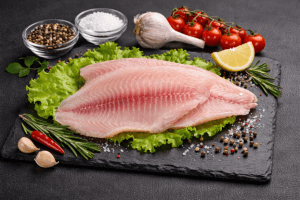
A restaurant serving fillets as a main course, for example, needs cuts that meet its portion standards. Food processing industries may have different specifications, such as raw material weight ranges, fillet thickness, or cut shape requirements.
For farmed fish, harvest sizes can be planned through production management. However, this does not mean that all farmed fish have uniform sizes. Variations can still occur, and product specifications should be confirmed with suppliers.
Wild-caught fish can also be supplied according to specific size categories, depending on the species, availability, and sorting process.
Before purchasing, buyers should check:
- Available weight ranges for whole fish or fillets.
- Consistency in cut dimensions and thickness.
- Trimming specifications and product condition.
- Quality requirements agreed upon with the supplier.
For businesses that require repeatable portion standards, clearly defined product specifications help streamline procurement and quality control.
3. Supply Availability and Procurement Planning
Seafood availability is an important factor, especially for businesses that require large quantities of raw materials or need regular deliveries.
Wild-caught fish supplies can be affected by seasonality, water conditions, fishing locations, fisheries management regulations, and fluctuations in catch volumes. Buyers therefore need to understand the availability patterns of their chosen species and develop suitable procurement plans.
In aquaculture systems, production and harvesting schedules can be planned, potentially helping businesses manage supply. Nevertheless, aquaculture also faces risks such as changes in water quality, fish diseases, operational disruptions, and other environmental factors.
This means buyers should not assume that all farmed fish are always available or that all wild-caught fish are difficult to source.
The more relevant question is whether a supplier can consistently meet the required volumes, specifications, and delivery schedules.
4. Product Quality, Freshness, and Handling
Production methods are not the only factors that determine seafood quality. Handling from harvest or capture until the product reaches the buyer also plays an important role.
The FAO explains that traceability helps supply chain participants track product movements and identify information needed for food safety control and product recalls when problems occur.
When evaluating products, buyers should pay attention to:
Product condition. Check appearance, texture, aroma, and other quality indicators relevant to the product specifications.
Temperature control. Ensure that fresh or frozen products are handled and stored according to applicable requirements.
Processing practices. Evaluate facility hygiene, handling procedures, and production process consistency.
Product documentation. Check lot information, product origin, production or packaging dates, and other documents required by the business and destination market regulations.
Farmed fish are not automatically safer than wild-caught fish, and the reverse is also true. Assessments should be based on product condition, handling practices, evidence of food safety controls, and verifiable documentation.
5. Traceability: Knowing the Product’s Origin and Journey
Traceability is becoming increasingly important in seafood procurement, particularly for businesses operating across long distribution chains or serving markets with specific documentation requirements.
Buyers need to know whether suppliers can provide sufficient information about product origin and its journey through the supply chain.
For wild-caught fish, relevant information may include species, fishing area, harvesting method, and the required legality and traceability documentation.
For farmed fish, information may include farming location, producer identity, relevant farming practices, processing location, and product lot identification.
The FAO recommends traceability approaches that cover various stages of the value chain for both capture fisheries and aquaculture. The goal is to support product identification, information verification, and more comprehensive risk management.
Therefore, buyers should not simply ask whether a product has a traceability system. They should also determine what information is available and how it can be verified.
6. What About Environmental Considerations?
Environmental considerations are often part of seafood procurement policies. However, comparing the environmental impacts of farmed fish and wild-caught fish is not as simple as deciding which is better.
For farmed fish, buyers can evaluate water quality management, feed sources, fish health, resource use, and the impact of farming activities on surrounding ecosystems.
For wild-caught fisheries, considerations may include fish stock status, the risk of overfishing, impacts on non-target species, fishing methods, and the effectiveness of fisheries management.
Both systems have different potential impacts and risks. The actual scale of these impacts depends on the species, location, production or fishing methods, and management practices.
Buyers can therefore request relevant data or evidence, including certifications appropriate to the product and destination market. Certifications should be assessed based on their scope, standards, and validity, rather than simply the presence of a logo on the packaging.
7. When Is Farmed Fish a Relevant Choice?
Farmed fish can be a relevant option when buyers need clearly defined product specifications, planned supply, and raw materials suited to specific processing requirements.
For example, a restaurant that regularly serves fish fillets may need a supplier capable of meeting weight and thickness standards. Distributors and food processors may also require planned volumes and delivery schedules.
However, this suitability still needs to be demonstrated through an evaluation of the supplier and the products offered.
Buyers can consider the following questions:
- Do the product specifications meet menu or production requirements?
- Does the supplier have a quality control system that can be clearly explained?
- Do supply volumes and delivery schedules match operational needs?
- Is information about product origin and traceability available?
- Do production practices and documentation meet business requirements?
This approach helps buyers evaluate farmed fish based on actual needs rather than simply because the product comes from aquaculture.
8. King Tilapia as an Alternative for Foodservice Needs
King Tilapia from Regal Springs Indonesia is one farmed fish option that can be evaluated for restaurant and foodservice needs.
When selecting raw materials, buyers should still consider product specifications, cut sizes, processing requirements, and compatibility with their business’s operational standards.
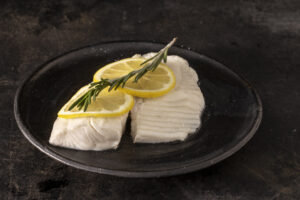
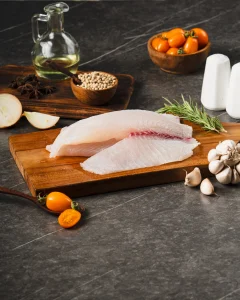
For example, the King Tilapia Loins product standard specifies a minimum weight of 106 grams per piece and a minimum thickness of 19 mm. The product standard also specifies a target cooking yield of more than 85% for fresh loins or frozen products that are handled properly.
These specifications can serve as a reference for buyers who need fish cuts with defined dimensions for menu development. However, the cooking yield target does not guarantee identical results in every kitchen, as actual outcomes depend on product condition, storage, thawing, handling, and cooking techniques.
As with other seafood products, the decision to select King Tilapia should still be based on business requirements, available specifications, and evaluations of product quality and the supplier.
Learn more through the King Tilapia page from Regal Springs Indonesia.
Making Informed Seafood Procurement Decisions
Farmed fish and wild-caught fish have different characteristics in terms of production, supply planning, and resource management considerations. However, production methods alone are not enough to determine a product’s quality, safety, or sustainability.
For seafood buyers, procurement decisions should consider specification consistency, quality and handling, supply availability, traceability, environmental factors, and costs that align with business needs.
With this approach, buyers can select seafood products based on relevant, verifiable information rather than relying solely on the labels farmed or wild-caught.
King Tilapia from Regal Springs Indonesia can be one alternative among farmed fish options for foodservice needs, with selection decisions still grounded in product specifications and each business’s operational requirements.