In the foodservice business, choosing fish ingredients is about more than just selecting the type of fish. The product format delivered to the kitchen also affects preparation processes, portion consistency, cooking time, and cost calculations for each dish.
A restaurant serving grilled fish may need cuts with uniform sizes. Meanwhile, a seafood restaurant that emphasizes whole-fish presentation may prefer fish served with the head and bones still attached.
Three common product formats to consider are fillet, loin, and whole fish. Each has distinct characteristics, advantages, and operational considerations.
So, which option best suits your business needs?
1. Fillet: Practical for a Variety of Menu Creations
A fillet is a cut of fish flesh separated from the backbone. Depending on the product specifications, a fillet may still have its skin or be skinless, and it may require additional trimming before cooking.
This format is widely used for menus that require flexibility in preparation and presentation.
Advantages of fillets for foodservice:
- Versatile for various menus. Fillets can be prepared as grilled fish, pan-seared fish, fish and chips, fish burgers, or dishes featuring signature restaurant sauces.
- Simplifies kitchen preparation. Some of the work involved in separating the flesh from the bones has already been completed before the product arrives.
- Supports portion control. Fillets can be cut according to recipe requirements, provided the ingredient size and specifications allow it.
- Facilitates menu development. A single type of ingredient can be used in several different dishes.
However, fillets still need to be checked for size, thickness, skin condition, trimming, and other specifications. Fillets with inconsistent sizes can require different cooking times and make portion standardization more difficult.
Suitable for: Casual restaurants, hotels, catering businesses, modern restaurants, and foodservice operations that need versatile ingredients for a variety of menus.
2. Loin: For More Standardized Portions
A loin is a cut of fish flesh prepared according to specific shapes and specifications. In foodservice, loins can be a suitable option when kitchens need cuts with more defined dimensions for main courses.
Compared with more general fillet cuts, loins with standardized specifications can help chefs develop recipes and determine portions more consistently.
Some of the advantages include:
- More controlled portions. Weight and dimensional specifications help kitchens plan serving sizes.
- More consistent presentation. Cuts with suitable shapes and thicknesses make main courses easier to plate consistently.
- Better cooking process planning. More uniform cut sizes help kitchens manage cooking times and methods.
- More measurable ingredient requirements. Standardized cuts can simplify calculations of ingredient needs per serving.
For example, King Tilapia Loins specifications include a minimum weight of 106 grams per piece and a minimum thickness of 19 mm. These standards can serve as a reference for foodservice businesses that need fish cuts for main courses.
Nevertheless, the final results still depend on cooking techniques, product condition, storage, and handling before preparation. Size specifications alone do not automatically guarantee identical cooking results.
Suitable for: Restaurants that rely on fish-based main courses, hotels, premium restaurants, and kitchens that require more consistent portion standards.
3. Whole Fish: Highlighting Presentation and Dish Character
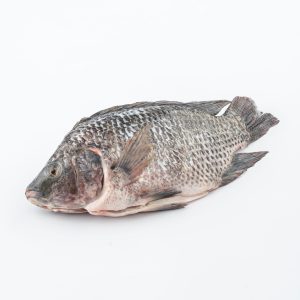
Whole fish refers to fish supplied in its intact form, with the head, bones, and other body parts still attached. Specific handling requirements depend on the product supplied, such as whether the fish has already been gutted or remains completely unprocessed.
This format has its own distinctive appeal, particularly for restaurants that want the fish to become the centerpiece of the dining table.
Advantages of whole fish:
- Creates a distinctive presentation. Whole fish can become the main visual element of a dish.
- Supports specific cooking techniques. Whole fish can be grilled, charcoal-grilled, or steamed according to the menu concept.
- Expands culinary variety. This format works well for traditional and modern seafood dishes.
- Offers flexibility in using different parts of the fish. Depending on kitchen skills and recipe requirements, different parts of the fish may be used in more than one dish component.
On the other hand, whole fish requires more attention during gutting, cutting, and waste management if these processes have not already been completed by the supplier. The weight of a whole fish is also different from the weight of the flesh ready to be served.
Therefore, cost calculations should consider the usable yield of fish flesh rather than just the purchase price per kilogram of whole fish.
Suitable for: Seafood restaurants, family restaurants, restaurants with sharing-style menus, and food businesses that emphasize cooking techniques and whole-fish presentation.
4. Comparing Fillet, Loin, and Whole Fish
There is no single product format that is always the best choice. The ideal option depends on the restaurant concept, kitchen capabilities, customer needs, and business cost structure.
5. Don’t Compare Prices per Kilogram Alone
One common mistake in ingredient procurement is making decisions based solely on the purchase price per kilogram.
Purchase price is important, but the actual cost is also influenced by preparation processes, usable flesh yield, cooking yield, labor requirements, and portion consistency.
For example, whole fish may appear more economical based on its purchase price. However, if kitchen staff need to spend considerable time gutting the fish and separating the flesh, labor costs and usable flesh yield must also be taken into account.
Conversely, fillets or loins that have already undergone certain cutting processes can help reduce preparation work. However, these products are not necessarily the most economical option in every situation.
To compare products more accurately, businesses can use several indicators:
- Raw ingredient cost per kilogram.
- Percentage of usable fish flesh.
- Preparation and labor costs.
- Cooking yield after the cooking process.
- Ingredient cost per portion actually served.
A simple formula is:
Ingredient Cost per Portion = Total Cost of Ingredients Used ÷ Number of Portions Successfully Served
For a more comprehensive calculation, preparation, labor, storage, and accompanying ingredients can also be included according to the business’s needs.
6. King Tilapia for Foodservice Needs
For businesses looking to develop fish-based menus with clearly defined ingredient standards, King Tilapia from Regal Springs Indonesia can be considered according to product requirements and available specifications.
King Tilapia Loins, for example, have a minimum weight specification of 106 grams and a minimum thickness of 19 mm. These standards can help kitchens establish portion sizes and plan cooking methods for main courses.
According to the product specifications, the target cooking yield for loins is more than 85% for fresh products or frozen products handled correctly. This figure represents a target based on product standards, not a guarantee of identical results in every kitchen. Cooking techniques, thawing conditions, handling, and storage still affect actual results.
To select the most suitable product format, businesses should discuss menu requirements, portion sizes, order volumes, and product specifications with their suppliers.
Learn more about King Tilapia from Regal Springs Indonesia and discover dish development ideas through Tilapia Recipe Inspiration.
Each Format Has Its Own Purpose
Fillet, loin, and whole fish serve different purposes in foodservice operations. Fillets offer menu flexibility, loins can support portion standardization, while whole fish provides a distinctive presentation.
The best choice is not simply the product format with the lowest purchase price, but the one that best matches dish requirements, kitchen capacity, quality standards, and cost per portion.
By understanding these differences, foodservice operators can make more informed procurement decisions while developing fish dishes that deliver consistent quality to customers.