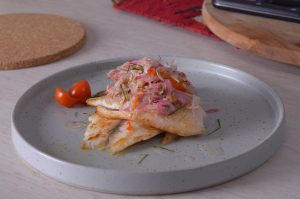
For Gen Z, food is about more than taste and price. Menu choices can also reflect lifestyle, nutritional needs, convenience, and the values they want to support. These changes create opportunities for foodservice businesses to offer dishes that better align with the habits of younger consumers, including menus featuring local food ingredients and fish protein.
Indonesia has a wide variety of fisheries-based protein sources that can be developed into modern dishes. One example is King Tilapia from Regal Springs, which offers white flesh, a mild flavor, and premium cuts for a range of culinary applications.
So, how can restaurants, catering companies, and foodservice providers take advantage of this opportunity?
Gen Z Is Starting to Look at Food from a Broader Perspective
Growing awareness of healthy eating habits and more responsible consumption is something worth considering for businesses in the food industry.
In July 2026, Indonesia’s Ministry of Health, together with TikTok Indonesia and Foodbank of Indonesia, launched the Makan Dengan Makna initiative, encouraging younger generations to make healthy eating based on local food ingredients part of their everyday lifestyles. The initiative also highlights the importance of communicating health education in ways that connect with young people’s daily lives.
Meanwhile, a study published in the journal Cleaner and Responsible Consumption in 2026 analyzed 1,160 Gen Z respondents in Indonesia to understand their motivations for sustainable food consumption. The study identified several consumer groups with different motivations, ranging from those primarily concerned with price to consumers who place greater emphasis on health and the environment.
These findings show that Gen Z is not a homogeneous consumer group. Therefore, menu strategies cannot rely solely on labels such as “healthy” or “sustainable.” They also need to consider taste, price, convenience, and the preferences of target customers.
Why Does Fish Protein Deserve a Place on Modern Menus?
Fish can be an alternative for expanding the variety of protein options in everyday meals. In addition to providing high-quality protein, fish can also contain vitamins, minerals, and certain fatty acids, depending on the species and product characteristics.
The Food and Agriculture Organization’s (FAO) The State of World Fisheries and Aquaculture 2024 report emphasizes that aquatic foods contribute to global food security and nutritional needs. FAO also stresses that the development of fisheries and aquaculture needs to consider sustainability to meet long-term food demands.
For foodservice businesses, fish protein can be incorporated into a variety of dishes, such as:
- Rice bowls: Grilled or fried fish served with rice, vegetables, and a signature sauce.
- Fish tacos: Fish pieces served with fresh vegetables and modern seasonings.
- Fried fish meals: Battered or breaded fish served with vegetables and a carbohydrate source.
- Bento boxes or catering meals: Convenient meal options for offices, campuses, and catering services.
- Sandwiches or fish burgers: Fish-based alternatives for quick-service menus.
These variations allow businesses to combine fish ingredients with local flavors as well as international culinary influences.
King Tilapia: Combining Fish Protein with Culinary Versatility
King Tilapia can be an option for businesses looking to develop fish protein-based menus with premium characteristics.
According to a laboratory test report available in Regal Springs’ documentation, a raw tilapia fish sample contained 19.52 grams of protein per 100 grams, total energy of 105.79 kcal per 100 grams, and total fat of 2.03 grams per 100 grams.
Beyond its nutritional profile, King Tilapia has several characteristics relevant to professional kitchens:
- Mild flavor: Its clean, mild flavor allows flexibility when using local or international seasonings.
- Thick loin cuts: King Tilapia Loins have a minimum thickness specification of 19 mm.
- Measurable sizing: Loins have a minimum weight of 106 grams, while fillets have a minimum weight of 5 oz, according to product specifications.
- Cooking performance: King Tilapia Loins have a cooking yield criterion of more than 85% when prepared from fresh product or frozen product thawed according to procedure and cooked until done.
These characteristics can help chefs design menus with more predictable portions and presentation. However, actual results still depend on ingredient handling, cooking techniques, and the specifications of the product used.
Opportunities for Restaurants, Catering Companies, and Foodservice Businesses
To make fish protein-based menus appealing to younger consumers, businesses need to connect nutritional value with an enjoyable dining experience. Healthy food does not have to be boring, and using local ingredients does not mean being limited to traditional dishes.
Several approaches are worth considering:
1. Preparing Local Ingredients with Modern Presentation
King Tilapia can be paired with sambal matah, yellow spice paste, Indonesian herbs and spices, or internationally inspired sauces. This approach gives businesses room to develop a distinctive menu identity.
2. Offering Convenient Menu Options
Rice bowls, bento boxes, and ready-to-eat meals can be relevant formats for consumers with busy schedules, including university students and young professionals.
3. Communicating Nutritional Information Accurately
If a menu is promoted as a source of protein, its nutritional information should be based on data appropriate to the product and serving size. Transparency helps consumers understand what they are choosing.
4. Considering Value and Cost per Serving
For foodservice operators, fish selection also needs to account for cut size, cooking yield, ingredient consistency, and operating costs. The purchase price per kilogram is not the only factor in determining an ingredient’s value.
5. Sharing Ingredient Sourcing Stories Responsibly
Stories about farming practices, quality, and product origins can be part of brand communication, provided the claims can be substantiated and do not exaggerate environmental benefits.
From Local Food to Future Menu Opportunities
Gen Z presents opportunities for the foodservice industry to keep innovating, but effective approaches require an understanding of the diversity of their preferences. Price, taste, convenience, nutritional content, and environmental concerns may carry different levels of importance for different consumers.
With its white flesh, mild flavor, and cut specifications designed for professional culinary needs, King Tilapia can be one ingredient worth exploring for fish protein-based menus.
For restaurants, hotels, catering companies, and foodservice providers, the opportunity is not simply to follow a trend. It is to create dishes that combine appealing flavors, clear nutritional value, and consistent kitchen operations.
Ultimately, a menu that resonates with a new generation is not just one that looks appealing. It must also meet customer needs and be operationally sustainable for the business.